
AI can now write articles, generate images, and even produce videos in seconds. For businesses, this speed is incredibly attractive — faster marketing content, cheaper production, and round-the-clock output.
But speed doesn’t always equal quality.
That’s why human verification remains essential. AI-generated content can be powerful, but without human review, it can also create costly mistakes, brand risks, and trust issues.
The Rise of AI-Generated Content
Today, AI tools can:
- Write blog posts and product descriptions
- Generate social media captions
- Create images and design assets
- Produce video scripts and voiceovers
For businesses, this means content can be produced at scale — but it also introduces new challenges.
Where AI-Generated Content Falls Short
AI doesn’t truly “understand” what it creates. As a result, it may produce content that is:
- Factually incorrect
- Outdated or misleading
- Off-brand in tone or messaging
- Culturally insensitive
- Inappropriate for certain audiences
Example: AI-Written Product Description
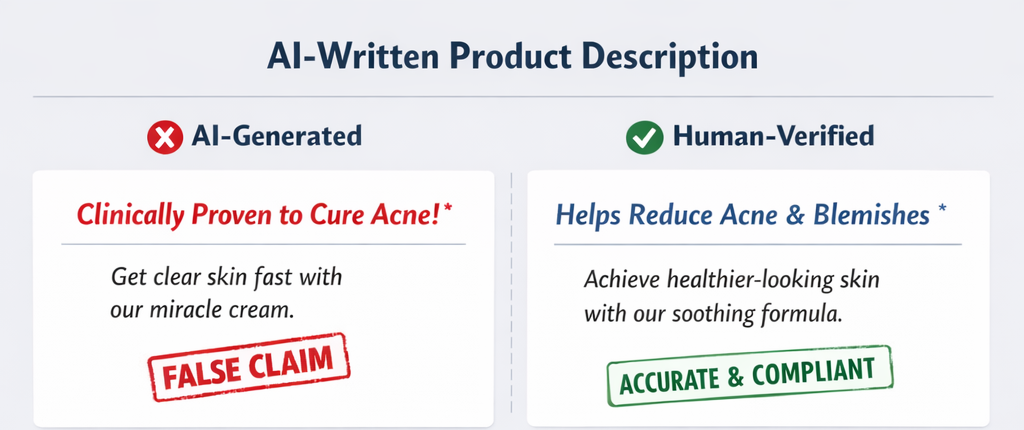
Imagine an e-commerce company using AI to write product descriptions for hundreds of items. The AI describes a skincare product as “clinically proven to cure acne,” even though no such clinical claim exists.
Without human review, this single line could:
- Violate advertising regulations
- Create legal risk
- Damage customer trust
A human reviewer can quickly flag and correct this before it goes live.
Why Human Verification Matters
Humans bring judgment that AI currently lacks:
- Understanding brand voice
- Checking factual accuracy
- Applying ethical and legal standards
- Interpreting nuance and context
- Ensuring cultural sensitivity
Human verification acts as a quality control layer between AI output and public-facing content.
AI Images vs Human-Verified Visuals
AI-generated images can look impressive — but they can also include:
- Incorrect details
- Unrealistic or misleading visuals
- Unintentional stereotypes
- Copyright or likeness concerns
Example: AI-Generated Marketing Image
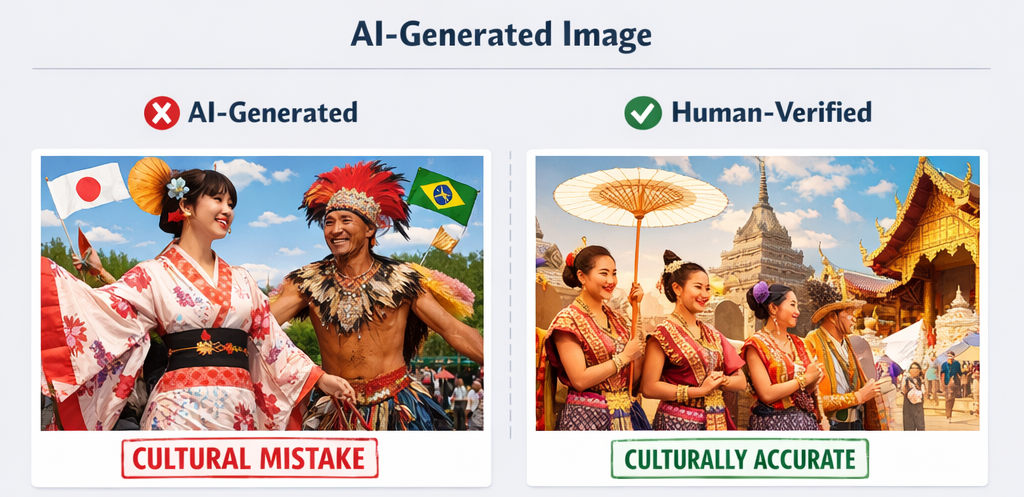
A travel company uses AI to generate an image of a “traditional local festival” for an ad campaign. The image mixes cultural elements from different countries, creating an inaccurate and potentially offensive representation.
A human reviewer familiar with the culture can spot this instantly and prevent a brand misstep.
AI Video Content vs Human Review
AI-generated videos and voiceovers may:
- Mispronounce names or places
- Use the wrong tone for sensitive topics
- Present inaccurate visual information
Example: AI Video Script
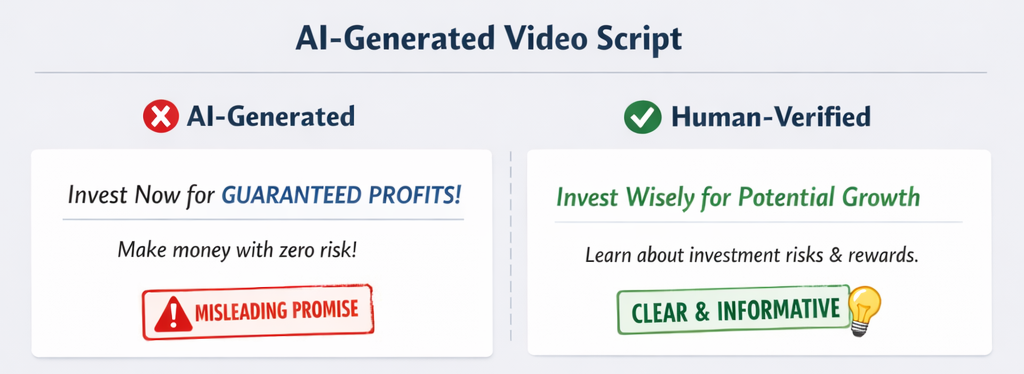
An AI-generated explainer video for a financial product includes oversimplified advice that could be misinterpreted as guaranteed returns. A human reviewer can adjust the language to ensure compliance and clarity.
How Crowd Workers Help Verify AI Content at Scale
Human verification doesn’t have to slow businesses down. With microtask platforms, companies can:
- Have multiple people review AI content quickly
- Validate facts, tone, and clarity
- Check for cultural appropriateness across regions
- Test content with diverse audiences
This allows businesses to keep the speed of AI while maintaining human quality control.
AI + Humans: A Smarter Content Workflow
The most effective content workflows combine:
- AI for speed and scale
- Humans for judgment and accuracy
Instead of choosing one over the other, businesses that blend both achieve better results — faster production without sacrificing trust.
Sample of Campaigns:
Review AI-Generated vs Human-Verified Content (2–3 Minutes)
Description:
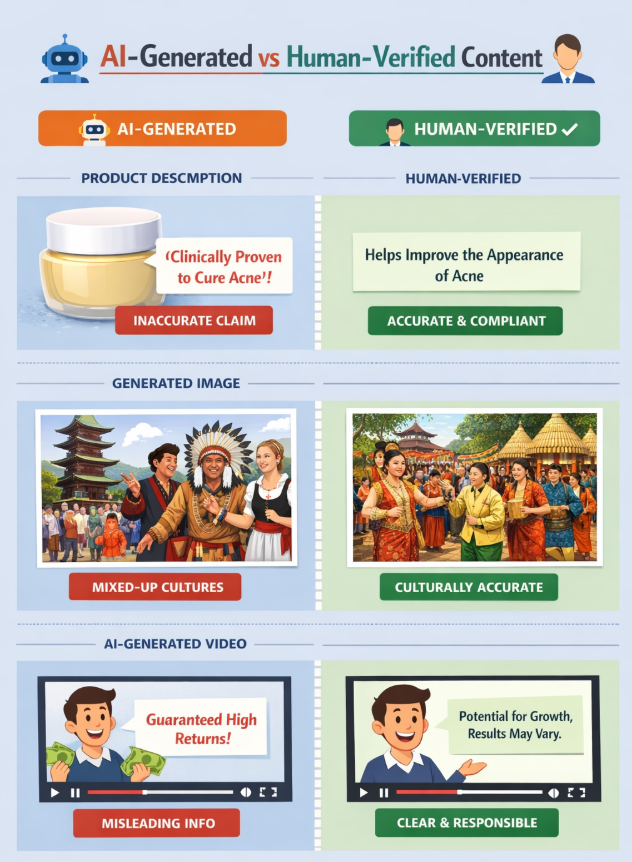
You will be shown examples of AI-generated content and human-verified content.
Your task is to review both and answer a few short questions about clarity, trust, and accuracy.
Steps:
- View the image provided
- Compare the AI-generated version vs the human-verified version
- Answer the short survey questions
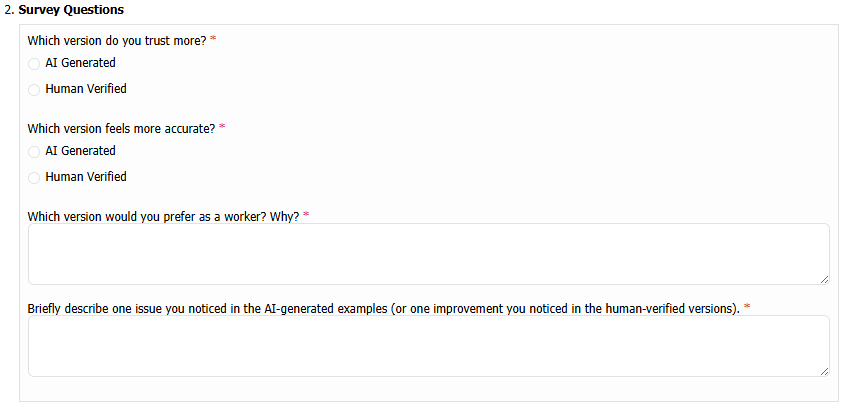
Questions:
- Which version do you trust more?
- Which version feels more accurate?
- Which version would you prefer as a customer?
- Briefly describe one issue you noticed in the AI-generated examples (or one improvement you noticed in the human-verified versions).

Data Collection / Research / Content Review / Testing
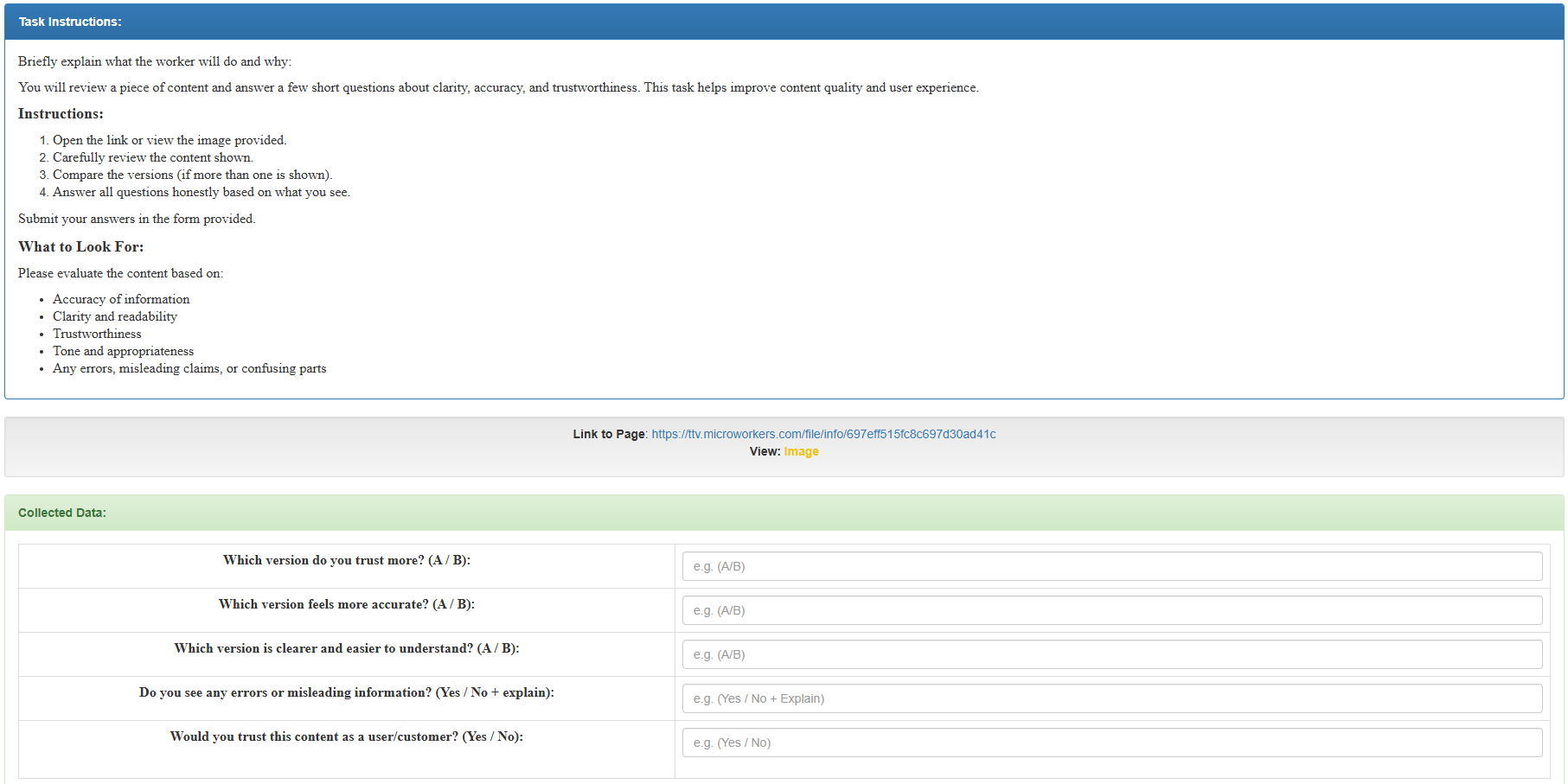
Briefly explain what the worker will do and why:
You will review a piece of content and answer a few short questions about clarity, accuracy, and trustworthiness. This task helps improve content quality and user experience.
Instructions (Step-by-Step)
- Open the link or view the image provided.
- Carefully review the content shown.
- Compare the versions (if more than one is shown).
- Answer all questions honestly based on what you see.
- Submit your answers in the form provided.
What to Look For (Guidelines for Workers)
Please evaluate the content based on:
- Accuracy of information
- Clarity and readability
- Trustworthiness
- Tone and appropriateness
- Any errors, misleading claims, or confusing parts
Questions to Ask Workers (You Can Reuse These)
- Which version do you trust more? (A / B)
- Which version feels more accurate? (A / B)
- Which version is clearer and easier to understand? (A / B)
- Do you see any errors or misleading information? (Yes / No + explain)
- Would you trust this content as a user/customer? (Yes / No)
Final Thoughts
AI-generated content is a powerful tool, but it’s not a finished product on its own.
Human verification ensures that what gets published is accurate, ethical, on-brand, and culturally appropriate. In a world flooded with AI content, businesses that invest in human review will stand out for quality, credibility, and trust.
No Comments so far.
Your Reply