
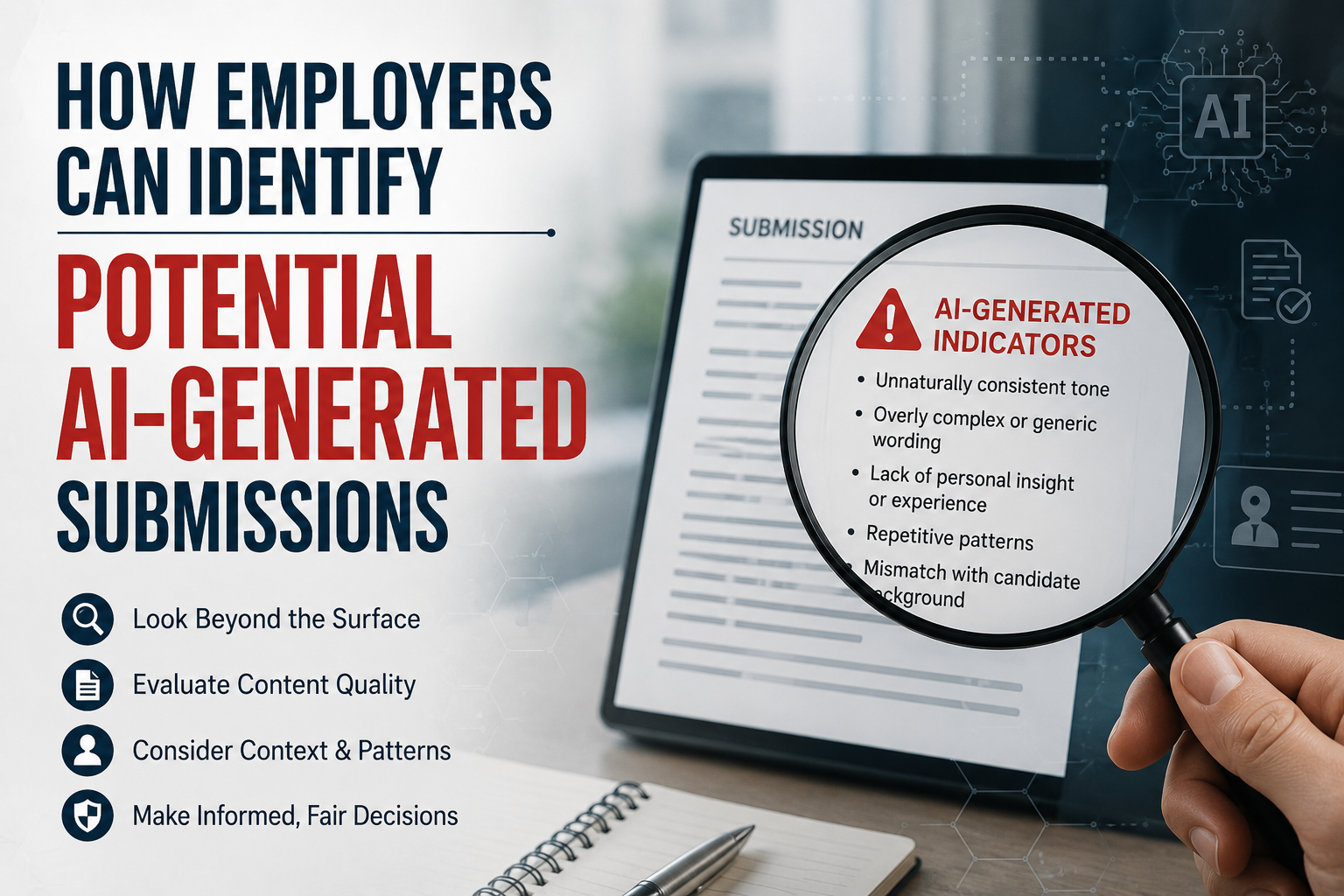
Artificial intelligence is transforming the way people work online. From generating written content and answering questions to creating images and conducting research, AI tools are helping workers complete tasks faster than ever before. While these advancements offer exciting opportunities, they also present a growing challenge for employers and campaign managers who rely on crowdsourced work: how can you tell when a task submission was completed by a human versus an AI?
As AI tools become increasingly accessible, employers are facing a new reality. Some workers may use AI to assist with tasks that were specifically designed to capture authentic human opinions, experiences, or creativity. This raises important questions about quality, compliance, and trust.
Why AI-Generated Submissions Matter
Not every use of AI is problematic. In many cases, AI can improve productivity and help workers perform repetitive tasks more efficiently. However, certain campaign types require genuine human input.
Examples include:
- Consumer opinion surveys
- Product reviews based on personal experience
- Market research studies
- User testing projects
- Social media engagement campaigns
- Creative brainstorming tasks
When AI-generated responses replace authentic human feedback, the integrity of the data can be compromised. Businesses may make decisions based on inaccurate information, resulting in flawed marketing strategies, product improvements, or customer insights.
Common Signs of AI-Generated Responses
While AI-generated content continues to improve, there are still several indicators employers can watch for:
- Overly Polished Language
Task: “Describe your experience using our website.”
Likely Human Response:
“I found most of the site easy to use, but it took me a while to find the pricing page. The menu was a little confusing on my phone.”
Potential AI-Generated Response:
“The website provided a seamless and intuitive user experience. Navigation was efficient, and the overall design contributed positively to user engagement.”
Why it stands out: The response sounds professional and polished but lacks specific observations that a real user would likely mention.
- Repetitive Patterns
Task: “What did you think about this product?”
Submission #1:
“This product offers several benefits and can improve the user experience significantly.”
Submission #2:
“This product provides numerous advantages and enhances the overall user experience.”
Submission #3:
“This product delivers multiple benefits and contributes positively to the user experience.”
Why it stands out: Multiple workers use nearly identical sentence structures and vocabulary despite supposedly providing independent opinions.
- Lack of Personal Experience
Task: “Describe the last time you used a food delivery app.”
Likely Human Response:
“I ordered sushi from a restaurant about 15 minutes away. The app estimated 30 minutes, but it arrived in 20. The driver had trouble finding my apartment building, though.”
Potential AI-Generated Response:
“Food delivery apps provide a convenient way for users to order meals from local restaurants. They often offer tracking features and a variety of payment methods.”
Why it stands out: The response discusses food delivery apps generally but doesn’t describe an actual experience.
- Unnaturally Fast Completion Times
Task: “Write a 300-word review of this article and provide three key takeaways.”
Expected Completion Time: 10–15 minutes
Observed Submission:
- Submitted in 45 seconds
- Perfect grammar
- Well-structured summary
Why it stands out: Even an experienced worker would need time to read the article before writing a detailed response.
- Generic or Vague Answers
Task: “What improvements would you suggest for this online store?”
Likely Human Response:
“The product filters didn’t work well when I searched for shoes. I’d also like to see more payment options at checkout.”
Potential AI-Generated Response:
“The online store could benefit from improvements to user experience, navigation, and overall functionality. Enhanced customer service and additional features may improve customer satisfaction.”
Why it stands out: The suggestions are so broad that they could apply to almost any website.
Balancing Quality Control and Fairness
It’s important to recognize that AI detection is not always accurate. Employers should avoid making assumptions based on a single indicator.
Instead, consider implementing a multi-layered review process that may include:
- Quality assurance checks
- Attention verification questions
- Manual review of suspicious submissions
- Follow-up questions requiring personal experiences
- Consistency checks across multiple responses
The goal should be to protect campaign integrity while treating workers fairly.
Campaign example:


Setting Clear Expectations
One of the most effective ways to reduce unauthorized AI usage is to clearly communicate campaign requirements.
Before launching a project, employers should specify:
- Whether AI tools are permitted
- Which tasks require original human responses
- What constitutes acceptable assistance
- Potential consequences for non-compliance
Clear instructions help workers understand expectations and create a more transparent working environment for everyone involved.
Campaign Example:


The Future of Crowdsourced Work
As AI technology continues to evolve, the relationship between human workers and AI tools will also change. Rather than viewing AI solely as a threat, employers can focus on designing campaigns that leverage the strengths of both.
The most successful projects will be those that clearly define when authentic human insight is required and when AI-assisted productivity is acceptable. By combining thoughtful task design, effective quality controls, and transparent communication, employers can continue to obtain reliable results while adapting to the changing digital workforce.
Final Thoughts
AI-generated submissions represent a new challenge for employers, but they also provide an opportunity to rethink how work is designed and evaluated. Organizations that proactively establish guidelines and quality standards will be better positioned to maintain trust, gather meaningful insights, and achieve successful campaign outcomes.
In a world where AI is becoming a standard workplace tool, the focus should not simply be on detecting AI usage—it should be on ensuring that every task delivers the value and authenticity that employers expect.
No Comments so far.
Your Reply